The importance of preserving your purpose in the age of AI: Why losing your ‘why’ may be more dangerous than any disease
04/28/2026 / By Lance D Johnson
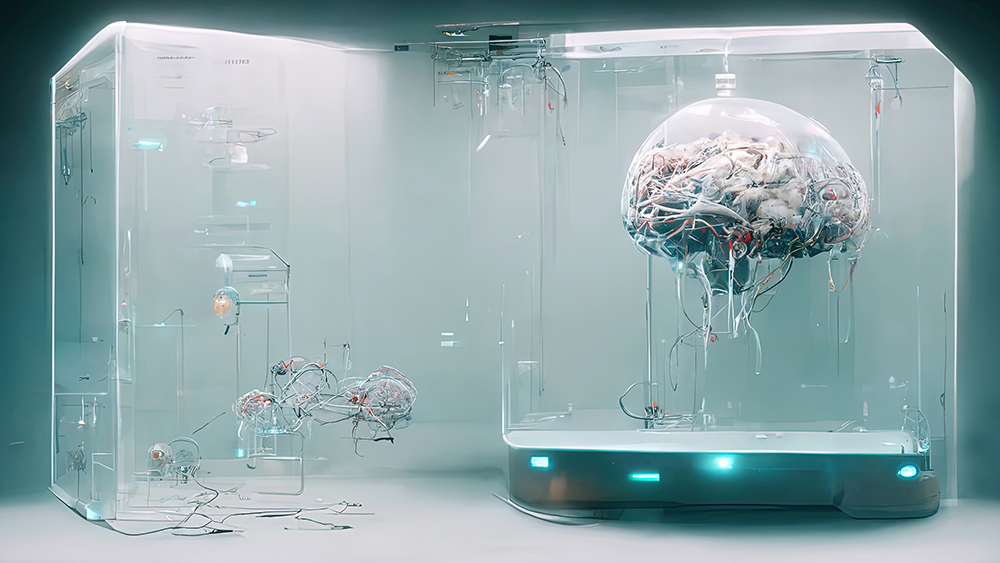
For 15 years, researchers tracked more than 13,000 middle-aged and older Americans, watching for the moment when memory frayed, judgment faltered, and the fog of cognitive impairment settled in. They expected to find the usual suspects: genetics, education, depression. What they did not expect was a single psychological trait that slashed dementia risk by nearly a third, independent of everything from the APOE E4 gene to years of schooling.
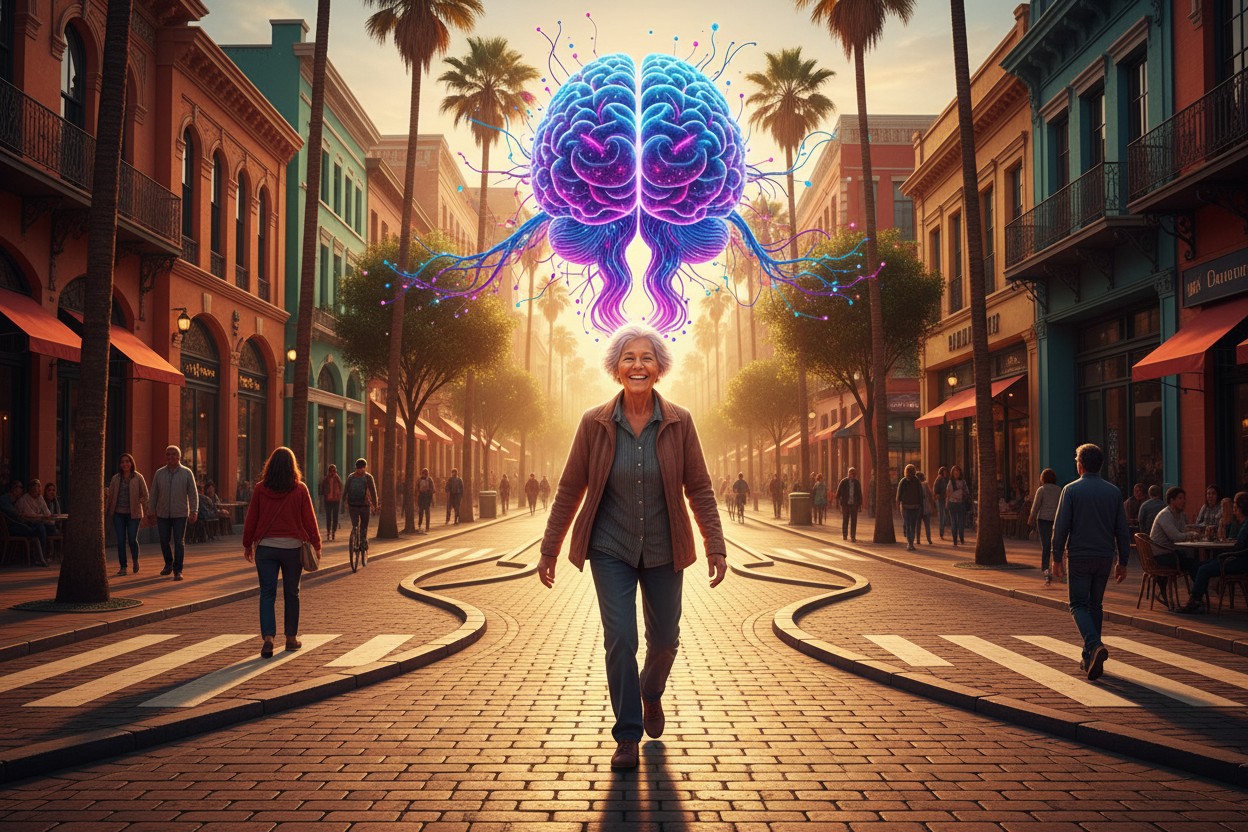
That trait is PURPOSE. And as artificial intelligence rapidly changes the journey of human experience and struggle, many are quietly surrendering the very quality that keeps their brains intact. But there are ways to adapt to this automation and preserve the meaningful connections that drive our individual purpose.
Key points:
- A 15-year study of 13,765 adults found higher life purpose correlated with 28% lower risk of cognitive impairment.
- Purpose delayed onset of dementia by roughly 1.4 months over eight years, comparable to modest gains from current medications.
- Biological pathways that improved in people with purpose include strengthened prefrontal cortex and hippocampus, plus reduced chronic stress.
- AI-driven automation removes meaningful struggle, risking widespread loss of purpose and cognitive decline.
- With a change in perspective, purpose can actually be augmented with AI rather than replaced, using technology to accelerate manifestation of meaningful goals.
- Preserving empathetic connection with people will be key to prevent the brain from isolating and losing its purpose.
The biology of direction
The research, published in The American Journal of Geriatric Psychiatry, followed participants from the Health and Retirement Study, a large U.S. population-based survey on aging. All 13,765 adults were cognitively healthy at baseline, aged 45 or older. Each completed a seven-question assessment measuring purpose in life, responding to statements such as, “I have a sense of direction and purpose in my life.”
Every two years for up to 15 years, participants completed the modified Telephone Interview for Cognitive Status, a standardized test of memory and thinking skills. By the study’s end, 1,820 people, roughly 13%, developed cognitive impairment including mild decline and dementia.
Those with higher purpose scores, however, showed a dramatically different trajectory. After adjusting for sex, baseline age, education, depressive symptoms, race, ethnicity, and even the APOE E4 gene, higher purpose was associated with a hazard ratio of 0.72. That translates to a 28% lower risk. The findings held across all ethnic and racial groups studied.
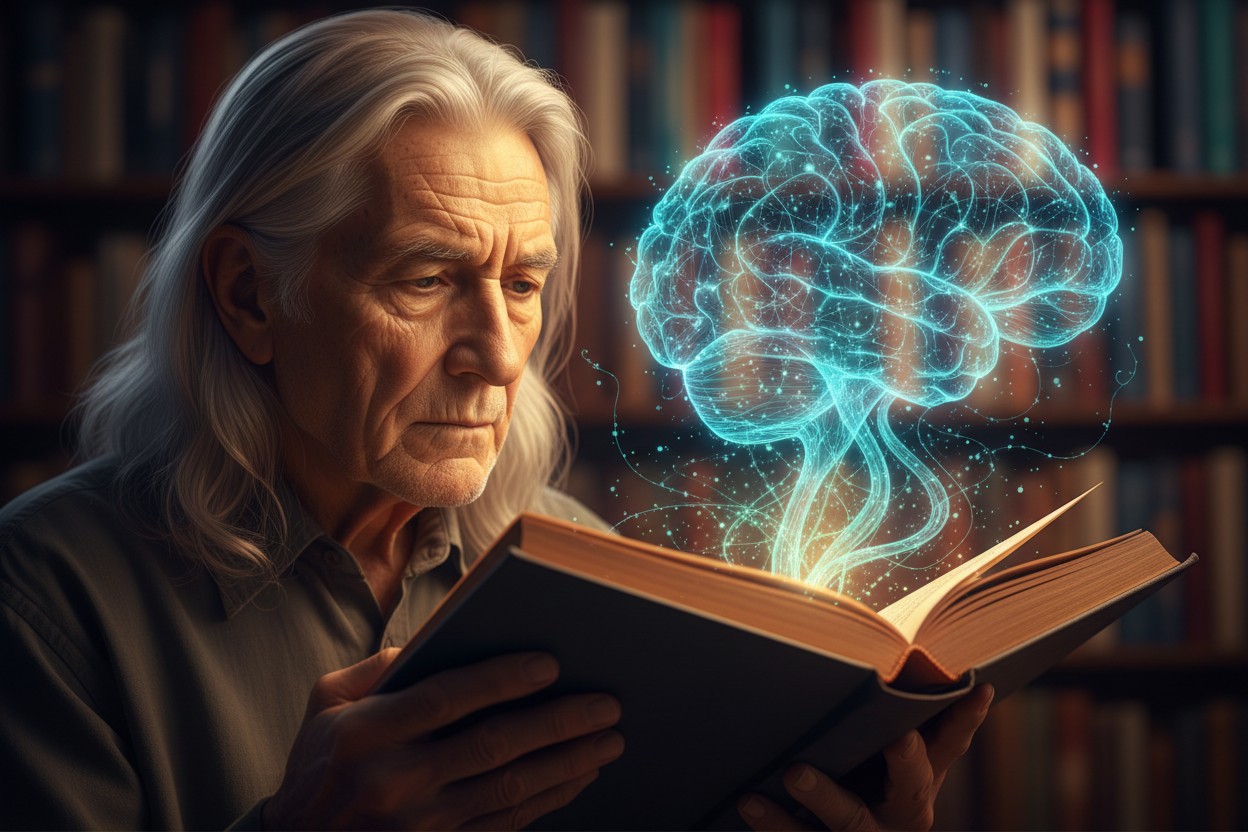
The biological mechanism is not mystical. Purpose activates and preserves the prefrontal cortex and hippocampus, brain regions governing motivation, attention, and memory. These areas typically shrink with age. Purpose keeps them firing. Purpose also buffers chronic stress, anxiety, and depression, all known accelerants of cognitive decline.
Dr. Angelina Sutin, a lead researcher on similar purpose studies, has previously noted that purpose-driven individuals sleep better, move more, maintain social connections, and manage stress more effectively. Each habit independently reduces dementia risk.
When machines erase meaning and how to adapt
But a quiet crisis is unfolding. As AI systems absorb tasks once requiring human judgment, creativity, and perseverance, millions are being removed from the very struggles that forge purpose. Call centers automate resolutions. Diagnostics shift to algorithms. Writing, art, and analysis increasingly belong to machines.
The danger is not AI itself. The danger is fear of AI, or worse, surrender in its face. When humans quit striving because a machine can do it faster, they lose the north star that organizes daily action, reduces stress, and fosters deep relationships. Purpose is not a luxury. It is an organizing principle for mental, physical, and emotional health. Without it, research shows, cognitive decline accelerates, disease risk rises, and resilience crumbles. So in order to cope with all the automation, one must change their perspective.
Burnout follows loss of purpose. So does depression. So does the slow erosion of memory and executive function. But in the face of rapid automation and AI, there is a different path to take than just helpless surrender. Purpose can be augmented and redesigned, and doesn’t need to be replaced or left behind because AI is advancing. AI can handle repetitive drudgery, freeing humans to focus on higher-order meaning. A scientist can use AI to analyze genomic data in hours rather than years, then spend those saved years mentoring young researchers. An artist can use generative tools to prototype ideas rapidly, then pour emotional depth into the final piece. A caregiver can use scheduling algorithms to manage logistics, then devote uninterrupted presence to the person in need. A publisher can organize the facts in seconds with AI, freeing up mental energy to focus on the angles and worldviews that shape public discourse. However…
The coming era of automation will test our individual and collective purpose. Yes, the key is using AI as an accelerator of manifestation, not an eliminator of work. But we cannot allow this process to isolate us. Yes, what used to take 10 years can now take 10 months, but how will humans work together to make the world a better place and how will individual purpose be realized, when people are removed from the very act of creating and working together as a team? A job that used to require ten people can now require two, but how much human purpose is lost along the way? What happens when people are removed from the equation and the pursuit of purpose is overrun by automation. What happens when visionaries merely project things into existence, and they are removed from the mundane tasks entirely: is purpose lost inherently?
The struggle that remains – the strategic, creative, empathetic, and relational work – is where purpose lives. Leveraging AI, the visionaries and thought leaders can emerge with an entirely new direction and pathway to their dreams and the completion of their goals, but they must not forget the empathetic connection they have with people, lest they devolve into isolation, losing parts of the brain that connected them to the struggle, to the connection they had with others. Purpose is not a reward for success in life. It is the engine of it. And in an age of intelligent machines, protecting that engine and connecting with people with true purpose may be the most urgent health intervention of all.
Sources include:
Submit a correction >>
Tagged Under:
AI risks, brain resilience, Burnout Prevention, cognitive decline, cognitive impairment, dementia prevention, hippocampus function, life purpose, longevity science, mental health, prefrontal cortex, psychological resilience, purpose and health
This article may contain statements that reflect the opinion of the author
RECENT NEWS & ARTICLES